Webinar of the Month
Enhancing Your Equine Reproductive Knowledge, One Month at a Time

EXPERT-LED WEBINARS

Enhancing Your Equine Reproductive Knowledge, One Month at a Time

Each month, the ISER Society Webinar-of-the-Month Committee spotlights a carefully selected webinar from our comprehensive library of more than 200 expert-led educational presentations.

The monthly featured webinar—chosen from our Mare, Stallion, Foal, and Assisted Reproductive Technique sections—showcases the cutting-edge research, practical techniques, and clinical insights that define excellence in equine reproductive science.

Complete, unlimited access to our entire webinar library is included with your ISER membership. Review our user guide for help accessing the webinars.

Webinar-of-the-Month Committee chair: Angus McKinnon, BVSc, MSc, DACT, DipVetMed, DABVP


Not an ISER Member Yet?

If you want access to more ISER webinars after viewing this month’s feature, you can purchase individual webinars, sign up for a full webinar subscription, or become an ISER Society member to gain completely free and unlimited access to our webinars.

Join now

Webinars of the Month

March 2026 | How to Monitor the Placenta in Mid to Late Gestation

ISER members can view this webinar via VetPD in the Mare section under the Diagnostic Ultrasonography discipline.

Presented by

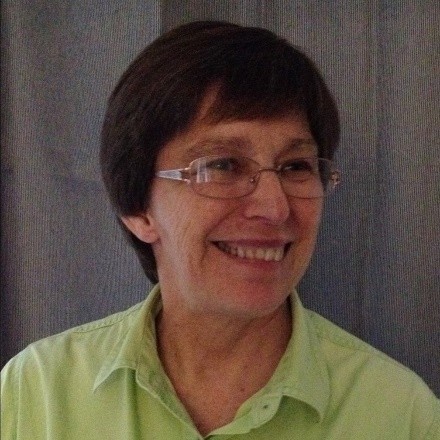
Joan Carrick, BVSc, MVSc, PhD, DACVIM (LAIM)
Equine Specialist Consulting

Joan Carrick graduated from the University of Queensland Veterinary School (Brisbane, QLD, Australia) in 1981 and was awarded a postgraduate honors degree in equine medicine in 1984 for investigating the role of stress on the absorption of colostrum by newborn foals. Carrick spent 12 years working and studying in North America, where she completed a residency in large-animal medicine and a master’s degree in veterinary science at the Western College of Veterinary Medicine (Saskatoon, SK, Canada), investigating the safe use of flunixin meglumine in newborn foals. In 1993, Carrick was awarded a PhD by the University of Georgia (Athens, GA) for investigating the effects of fish oils on animals’ responses to endotoxin, and then completed a fellowship in critical care at the University of Tennessee Medical School (Memphis, TN) and became a diplomate of the American College of Veterinary Internal Medicine. Carrick gained experience in gross and histopathology of neonatal foals, clinical pathology of endotoxic and septic shock horses, and large-animal clinical internal medicine.

While in North America, Carrick frequently lectured about inflammation, shock, intensive care, and n-3 fatty acids to veterinarians, human intensive care specialists, and biomedical researchers in the United States of America, Canada, and Europe. In 1997, she returned to Australia to work in equine practice, including at the Oakey Veterinary Hospital (Oakey, QLD, Australia) and the University of Melbourne (Melbourne, VIC, Australia). Carrick joined the Scone Equine Hospital (SEH) in 2005 as the veterinary advisor for the SEH laboratory and to complete Rural Industries Research and Development Corporation–funded research into placentitis. This research resulted in a very successful clinical program to identify and treat mares with high-risk pregnancies. Carrick is currently a specialist consultant who manages high-risk pregnant mares. Her work involves investigating the causes of a pregnancy loss or the delivery of a critically ill neonate, then monitoring and treating mares in subsequent pregnancies so that healthy foals are born.

February 2026 | How to Diagnose and Manage Dystocia

ISER members can view this webinar via VetPD in the Mare section under the Problems of Pregnancy discipline.

Presented by


James Crabtree, BVM&S, CertEM (StudMed), FRCVS
Equine Reproductive Services
University of Liverpool

James Crabtree graduated from the Royal (Dick) School of Veterinary Studies (Edinburgh, Scotland) in 2001. After four years in mixed practice, he traveled between the hemispheres, working for several years in specialist stud practice in the United Kingdom, Australia, and New Zealand. In 2010, he was awarded the RCVS certificate in Equine Stud Medicine and, in 2011, became a lecturer at the University of Liverpool (Liverpool, England), examining the stud medicine certificate since 2012.

Crabtree has published work on many topics relevant to clinical practitioners, including material on breeding soundness evaluation, infectious disease, peripartum problems, ovarian abnormalities, estrus suppression, persistent endometrial cups, management of spring transition, and twin pregnancy. Crabtree continues to perform and publish practice-based research and collaborates widely. In 2013, he became director of Equine Reproductive Services (UK) Limited, growing and developing a busy first-opinion and referral equine practice in Yorkshire, England. He is recognized as an Advanced Practitioner in Equine Stud Medicine, and is a current British Equine Veterinary Association (BEVA) council member and trustee of the International Equine Reproduction Trust.

Crabtree has made a sustained and significant contribution to veterinary professional development with formal and informal teaching and assessment of postgraduates. He has organized and delivered many continuing professional development courses and congresses in the United Kingdom and Europe, and has delivered presentations on material ranging from basic to advanced topics around the world. In 2022, his efforts were recognized by the Royal College of Veterinary Surgeons, which awarded Crabtree a fellowship for meritorious contributions to clinical practice.

January 2026 | How to Evaluate Sperm-Uterine Interaction in the Mare

ISER members can view this webinar via VetPD in the Stallion section under the Anatomy, Physiology and Endocrinology discipline.

Presented by


Mats Troedsson, DVM, PhD, DACT, DECAR
Maxwell H. Gluck Equine Research Center
University of Copenhagen

Mats Troedsson received his DVM degree in 1975 from the Royal Veterinary College in Stockholm. He worked as a private practitioner from 1975 to 1987, when he enrolled in doctoral studies at the University of California, Davis. He graduated with a PhD in reproductive immunology from the University of California, Davis, in 1991 and stayed on as a clinical instructor in equine reproduction for the next two years. Troedsson was hired as an assistant professor at the University of Minnesota’s College of Veterinary Medicine in 1993 and was promoted to associate professor with tenure in 1998. While at the University of Minnesota, he served as director of equine research, as well as director of the large-animal hospital. Troedsson moved to the University of Florida in 2002 as professor and service chief of theriogenology, as well as director of equine research programs. In 2008, Troedsson was recruited to the University of Kentucky as director of the Maxwell H. Gluck Equine Research Center and department chair of veterinary science. During a sabbatical leave from the University of Kentucky at the conclusion of his term as director and department chair, Troedsson led the efforts as a consulting director between 2015 and 2018 to develop a new Equine Veterinary Medical Center (EVMC) at the Qatar Foundation in Doha, Qatar. He is currently a professor of equine reproduction at the Maxwell H. Gluck Equine Research Center and an honorary adjunct professor of obstetrics and reproduction at the University of Copenhagen in Denmark.

Troedsson is board certified in the American College of Theriogenologists and the European College of Animal Reproduction. He has mentored 17 veterinarians in their training to become board certified in theriogenology, 12 PhD and MS students, 8 postdoctoral fellows, and multiple visiting scientists in his laboratory. Troedsson is the author or coauthor of more than 180 peer-reviewed scientific articles in addition to over 350 professional articles, abstracts, and book chapters. His research interests involve equine endometritis, the interaction between semen and the female reproductive tract, the biology of seminal proteins, and the diagnostics of equine placentitis. He has also been involved in research on assisted reproduction and wildlife reproduction.

December 2025 | How to Treat Uterine Fluid Accumulation

ISER members can view this webinar via VetPD.


Presented by

Lee Morris, BVSc, DVSc, DACT
MVS EquiBreed

Morris graduated from the University of Sydney in 1992 with a bachelor’s degree in veterinary science. After two years in rural veterinary practice in northern New South Wales, Australia, she undertook a three-year residency program in theriogenology at the University of Guelph in Canada, during which time she became a diplomate of the American College of Theriogenologists in 1997, then graduated with a doctorate in veterinary science in 1998. Her DVSc thesis work encompassed in vitro studies (in vitro fertilization), the production of embryos, and the assessment of male fertility.

From 1998 to 2001, Morris was the senior veterinary research scientist at the Equine Fertility Unit in Newmarket (UK), where she worked with Professor Twink Allen and developed the hysteroscopic (low-dose) insemination procedure for horses. In 2001, Morris was the senior registrar at the University of Sydney, where she provided clinical reproductive services for horses and dogs and conducted research into sex-sorted semen. She has been in New Zealand since 2002 and is now the specialist equine reproduction veterinarian at MVS EquiBreed. In 2004, she became a registered specialist in veterinary reproduction in Australasia. Her special interests include artificial insemination, embryo transfer, epididymal spermatozoa, hysteroscopy, equine laparoscopy, semen -freezing technology, sex-sorted semen, and challenging cases of mare or stallion infertility. Morris provides referral consultancy services to equine veterinary clinics in New Zealand and Australia.

In 2004, Morris was elected to the committee for the International Symposium of Equine Reproduction (ISER) and, in 2014, she was the local chairperson for the ISER XI in Hamilton, New Zealand.

Morris has been an honorary associate of the University of Sydney and an honorary lecturer at the University of Waikato (NZ) in recognition of her contribution to research. She has lectured and provided clinical tuition to veterinary students at the University of Guelph, Cambridge University (UK), Massey University (NZ), and the University of Sydney. She has been the industry supervisor of four MSc theses (University of Waikato) and two PhD theses (University of Sydney). Morris has published more than 25 peer-reviewed scientific papers, presented her research internationally, and written chapters in the Veterinary Clinics of North America and two textbooks on equine reproduction.

November 2025 | How to Determine Fetal Sex Between 55 and 75 days of Gestation

ISER members can view this webinar via VetPD in the Mare section under the Diagnostic Ultrasonography discipline.


Presented by

Marco Livini, DVM
Polo RiproVet Milano

Marco Livini graduated from the University of Milan in 1988 and took his first steps as a young veterinarian at Scone Equine Hospital (Australia) and at the famous National Hunt Rathbarry Stud (Ireland) as resident veterinarian in thoroughbred stud farm medicine. In 1991, he joined the Veterinari Associati Ippovet in Milan as an associate, where he worked as a theriogenologist until 2020. Livini currently works as a theriogenologist at Polo RiproVet Milano. His main interest is mare gynecology, and he has lectured on monitoring the health of the equine fetus using ultrasonography, gender determination in pregnant mares, and the treatment of infertility in mares. He served as a coordinator for SIRE (Italian Society of Equine Reproduction; 2000–2002) and as president of SIVE (Italian Society of Equine Practitioners; 2008–2010). Since 2016/2017, Livini has acted as an adjunct professor at the Veterinary University of Milan. He is co-author of the first and second editions of the DVD Atlante di Eecografia Equina and author of two Veterinary Advances apps, Equine Reproductive Ultrasound and Advanced Equine Reproductive Ultrasound.

October 2025 | How to Identify Granulosa Cell Tumors (GCT) in the Mare

ISER members can view this webinar via VetPD in the Mare section under the Diagnostic Ultrasonography discipline.


Presented by

Patrick McCue, DVM, PhD, DACT
Colorado State University

Patrick McCue researches assisted reproductive techniques and technologies in horses.

The Iron Rose Ranch Professor of Equine Theriogenology (veterinary reproduction technology), McCue focuses on reproductive endocrinology and pathology, hormone therapy, and embryo transfer. He also attends high-risk obstetrical cases at the James L. Voss Veterinary Teaching Hospital.

McCue is a diplomate of the American College of Theriogenologists and currently coordinates the mare and stallion clinical services at the Colorado State University Equine Reproduction Laboratory.

McCue received his BA from the State University of New York, Potsdam, in 1978. He earned his DVM and PhD from the University of California, Davis, in 1986 and 1993, respectively.